

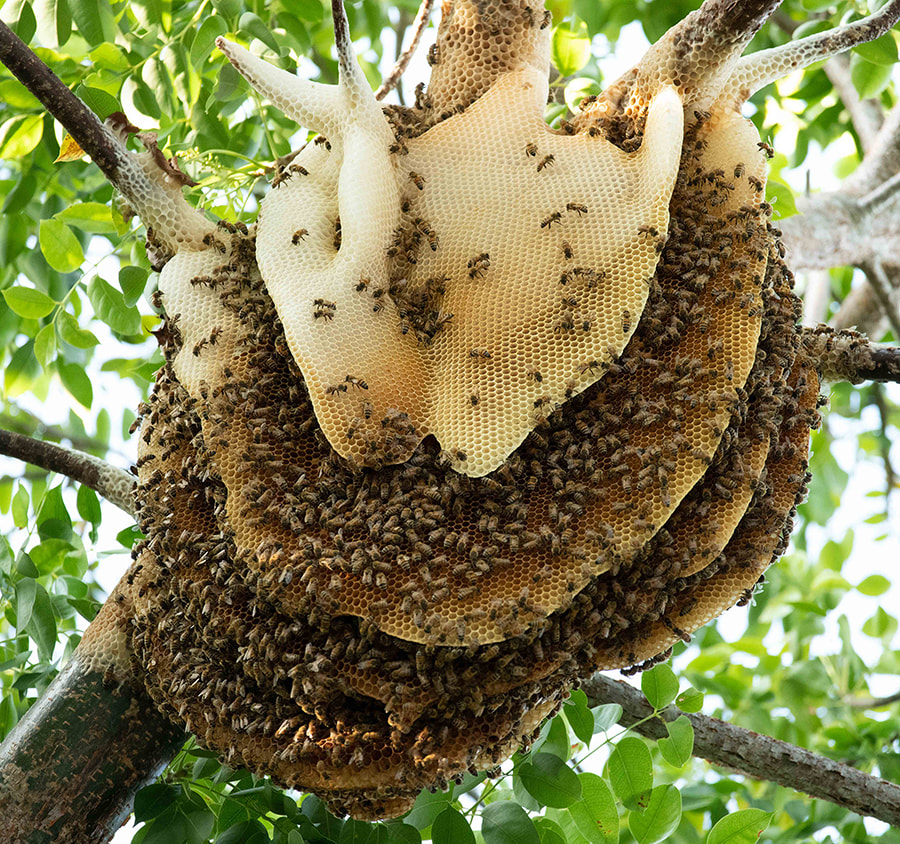
 A natural honeybee hive, nestled on a sturdy limb thirty feet up in a gumbo limbo tree. It was a beginning to a wonderful day, as I looked up and discovered a natural honeybee hive, nestled on a sturdy limb thirty feet up in a gumbo limbo tree. Hundreds of honeybees were thriving on the abundant resources of nectar, pollen, water and sunlight found in my Florida friendly yard. Upon sharing the news with my husband Ted, as he sat sipping his honey sweetened cappuccino, he urged me to get the bees out of the tree so they’ll be safe, as the limb supporting their growing nest may break. If you were the proverbial “fly” or “bee” on the wall, this is how the conversation went: Make the bees safe? How would that would work? He replied, "You put a box on the ground and the bees go in it." “Really… to get bees, you need a queen... where would you get the queen? "From the hive in the tree," he says. 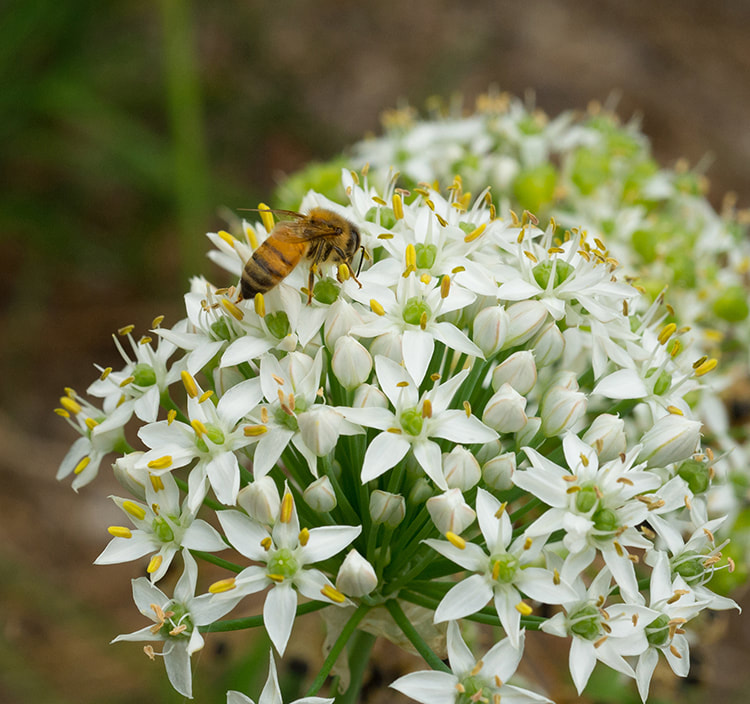 Bees are important ... it goes without saying. Without bees there are no flowers to grace your dining table, no plants to eat. Silly me. I thought, how could it be that bees, who have survived in the wild for millions of years, all of a sudden need my assistance to live? I thought this was capitalizing on the bees rather than saving them, so I rejected that idea, and the bees continued to grow their hive. Then one clear September morning, I awoke to the sound of the mosquito control helicopter. Outside I found the honeybees were dying from the spray. I cried as I watched with awe as the bees were slowly dying due to the ignorance of people who should be preventing this type of carelessness. There must be a better way to control the mosquito population without indiscriminately blanketing everything with poison. 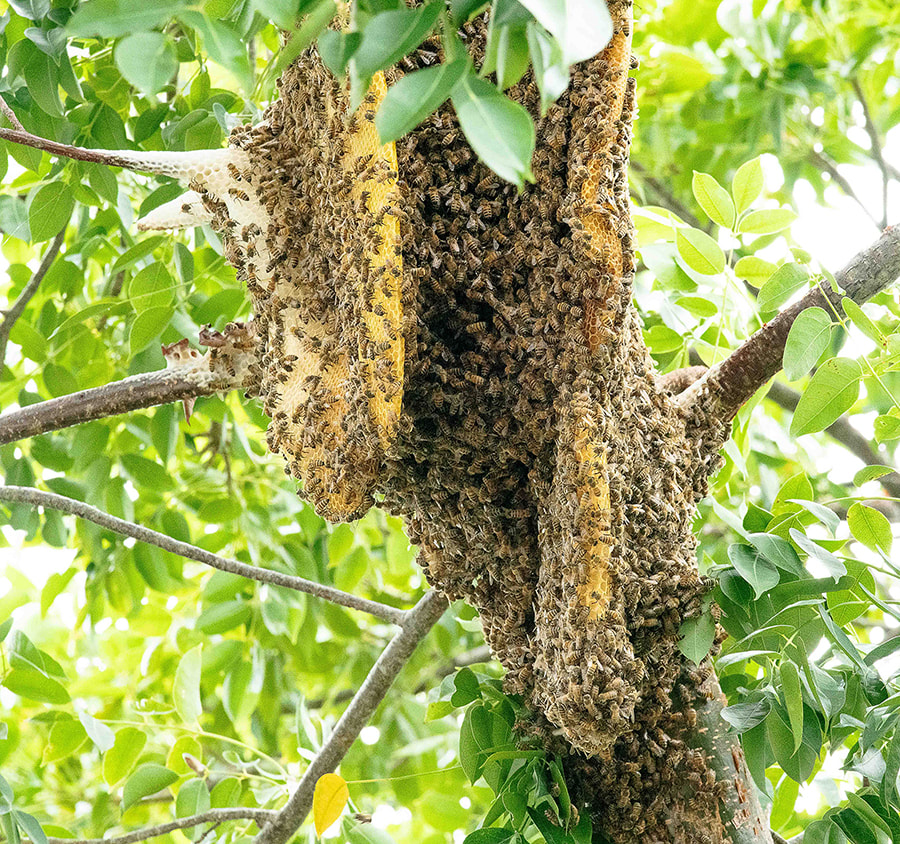 Their hive rebounded after mosquito spraying, only to get whacked by hurricane Ian’s winds, which caused several “chambers” to fall to the ground. 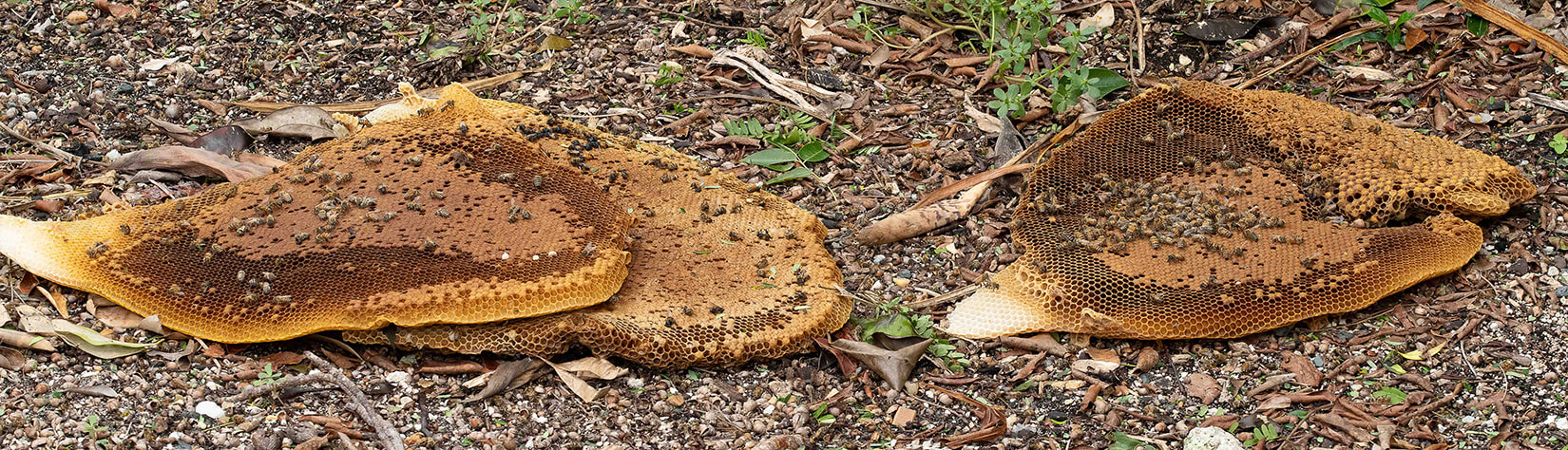 Somehow I had an easier time reconciling the loss of bees from this natural disaster, than to the pesticide spraying event weeks earlier. 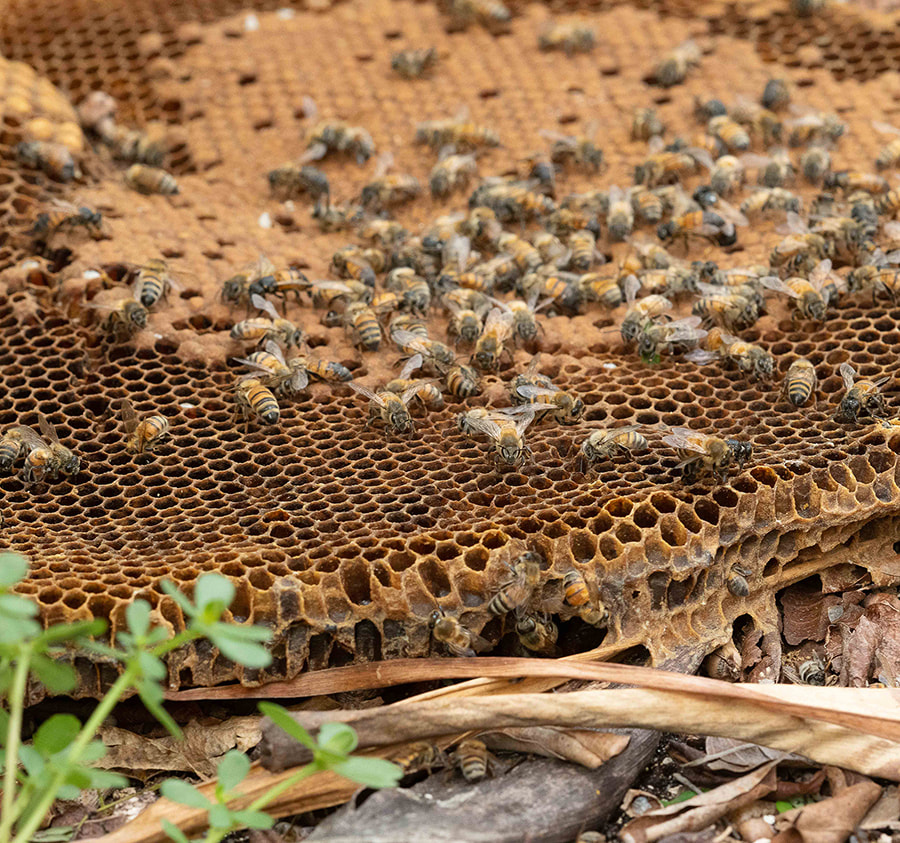 More bees died and the larvae contained within perished soon after. That’s when I learned that the only way you can protect a hive is by covering it in advance of the spray with a wet sheet. The bees encounter the wet sheet, think it is raining, and stay inside. But since the hive was high up, the sheet method was not practical. I devised a plan for saving the bees by creating a little artificial rain shower over their hive by using my garden hose. The next spraying event we had better results. Rather than a hundred plus bees dying, the casualties were reduced to a couple dozen dead bees. Bees are important ... it goes without saying. Without bees there are no flowers to grace your dining table, no plants to eat. What is happening here? If I called a beekeeper to move the bees, who would pollinate the vegetables and flowers in my garden? Crazy mixed up world where you have some “men” protecting nature from the actions of other “men”. The bees do need our help to survive. Beekeepers, "keep" the bees for their honey, pollen and wax and in return, cover the beehives during spray events. 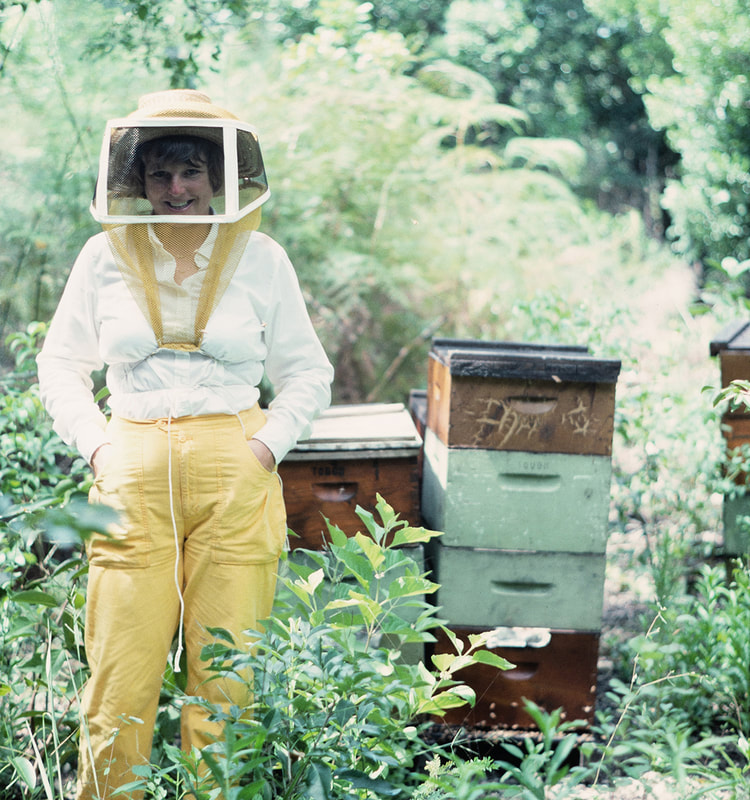 I suited up with beekeepers hat, dense head and shoulder mesh, long sleeves and jeans, I was advised to walk very slowly and make no sudden movements, and the bees would pay no attention to me, all the while we were stealing their honey. Life is Tough. I found this out in 1988 when I spent a day with beekeepers Lois and Sid Tough who kept their hives behind the thick green walls of foliage lining old Card Sound Road in N. Key Largo. Tough kept his hives locally year round, at sites with names like “The Refrigerator” or “Broken Tree”, referring to landmarks in the area. He followed the blooms of the Keys mangroves, the Everglades palmetto, Florida holly and the Homestead farm crops and avocado groves. Tough moved his bees to different locations on Mondays, removed honey filled hives on Saturdays, and extracted the honey on Sundays, all while working five days a week at a Miami boat yard. 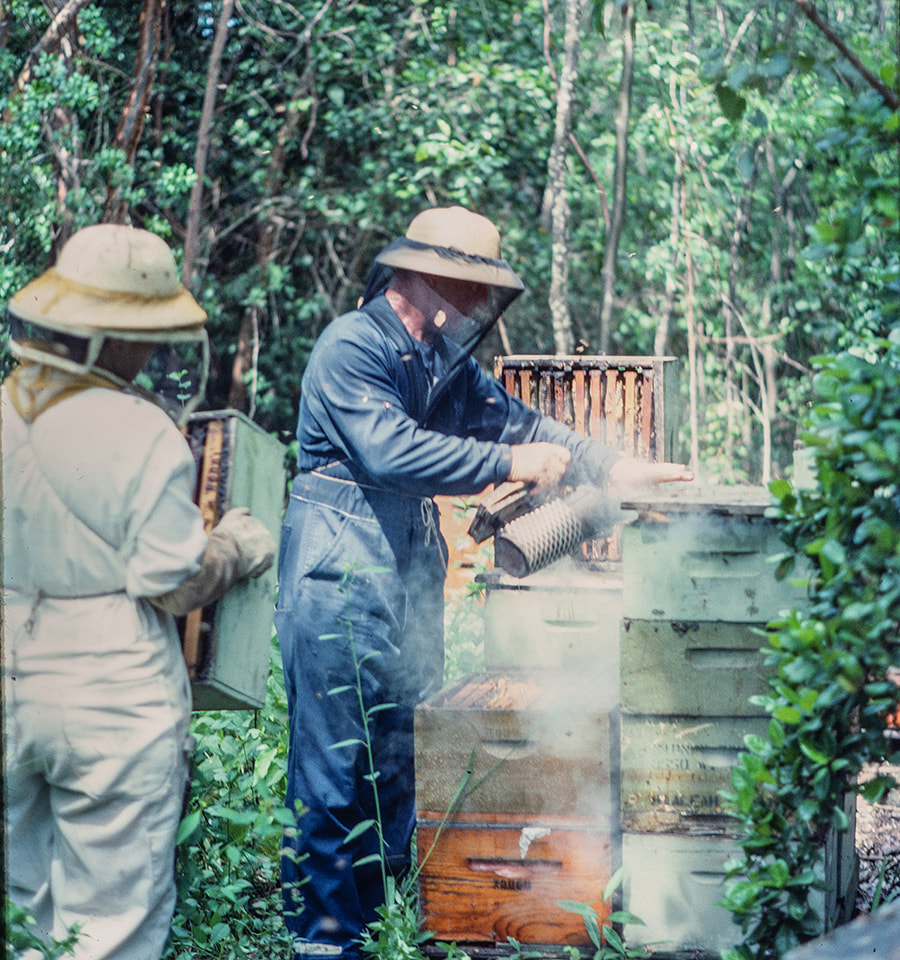 Lois and Sid Tough who kept their hives behind the thick green walls of foliage lining old Card Sound Road in N. Key Largo Taking life in stride is part of “Tough’s Law”, which states that some days working is hard and other days it’s even harder. Tell that to the bees in my yard. Their hive rebounded after mosquito spraying, only to get whacked by hurricane Ian’s winds, which caused several “chambers” to fall to the ground. More bees died and the larvae contained within perished soon after. Somehow I had an easier time reconciling the loss of bees from this natural disaster, than to the pesticide spraying event weeks earlier. 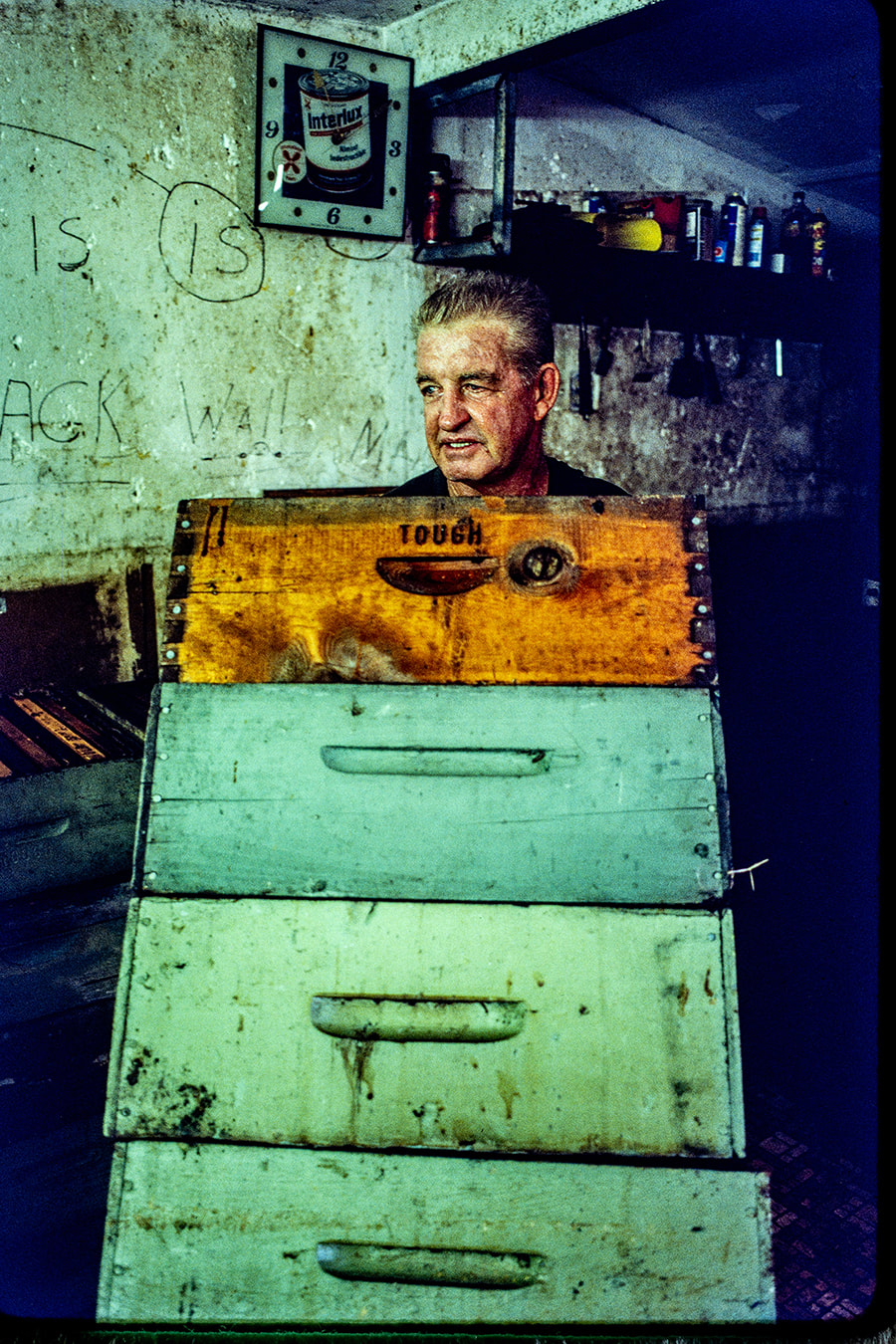 Taking life in stride is part of “Tough’s Law”, which states that some days working is hard and other days it’s even harder. The Queen Lives!! At least in my bee hive in the Northernmost Territory of the Conch Republic. Thanks to Nelson Gordy whose passion for bees and the hobby of beekeeping is helping the likes of me and others who find themselves “keepers” of bees with great education and removal services.
Though I probably will not become an official “beekeeper”, I do hope the queen and her hive remain happy and thriving in my Florida friendly yard.
0 Comments
|
CAROL ELLIS
This photographic website provides me the opportunity for self-expression, for sharing Archives
May 2024
TAGS
All
|
 RSS Feed

HOME | THE ARTIST | TECHNIQUE & MEDIA | ART IN HOMES & PUBLIC SPACES | JOURNAL | CONTACT
© Copyright 2022. Carol Ellis Photography.
All Rights Reserved.
© Copyright 2022. Carol Ellis Photography.
All Rights Reserved.
Web Development by: Mellowfish Media